A Live Digital Model of Grid Infrastructure
GridBrain’s Twin Engine creates a continuously updated digital twin of the power grid. It transforms passive telemetry, GIS, and infrastructure datasets into a continuously updated, living model of system behavior.
Operators gain the ability to simulate grid conditions, forecast asset health, and evaluate operational scenarios safely before taking any physical action.
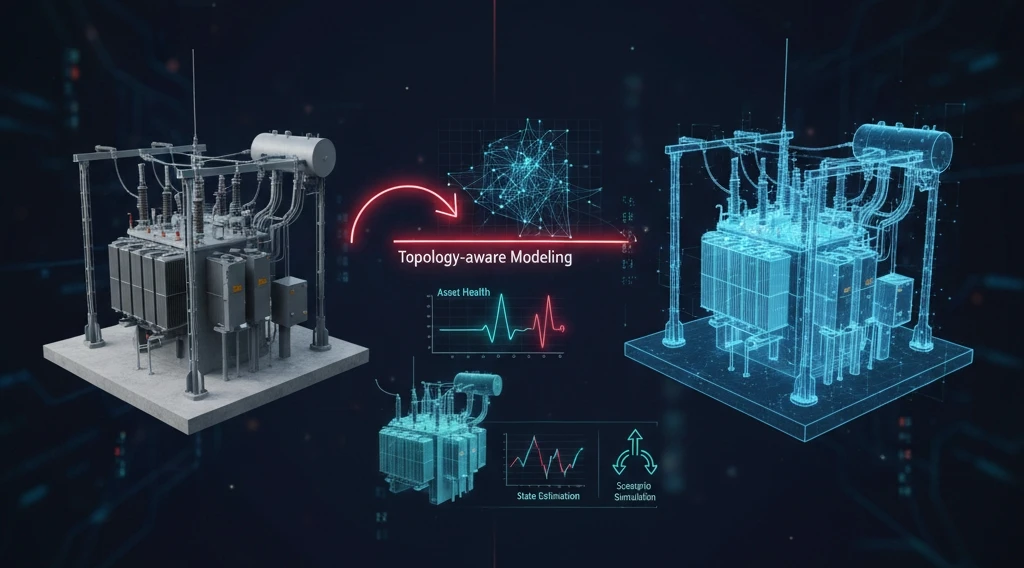
Simulate
Evaluate operational scenarios and test load growth safely before taking any physical action.
Forecast
Model equipment aging, transformer stress, and potential infrastructure degradation in real-time.
Execute
Gain absolute confidence in automated switching, load balancing, and dispatch execution.
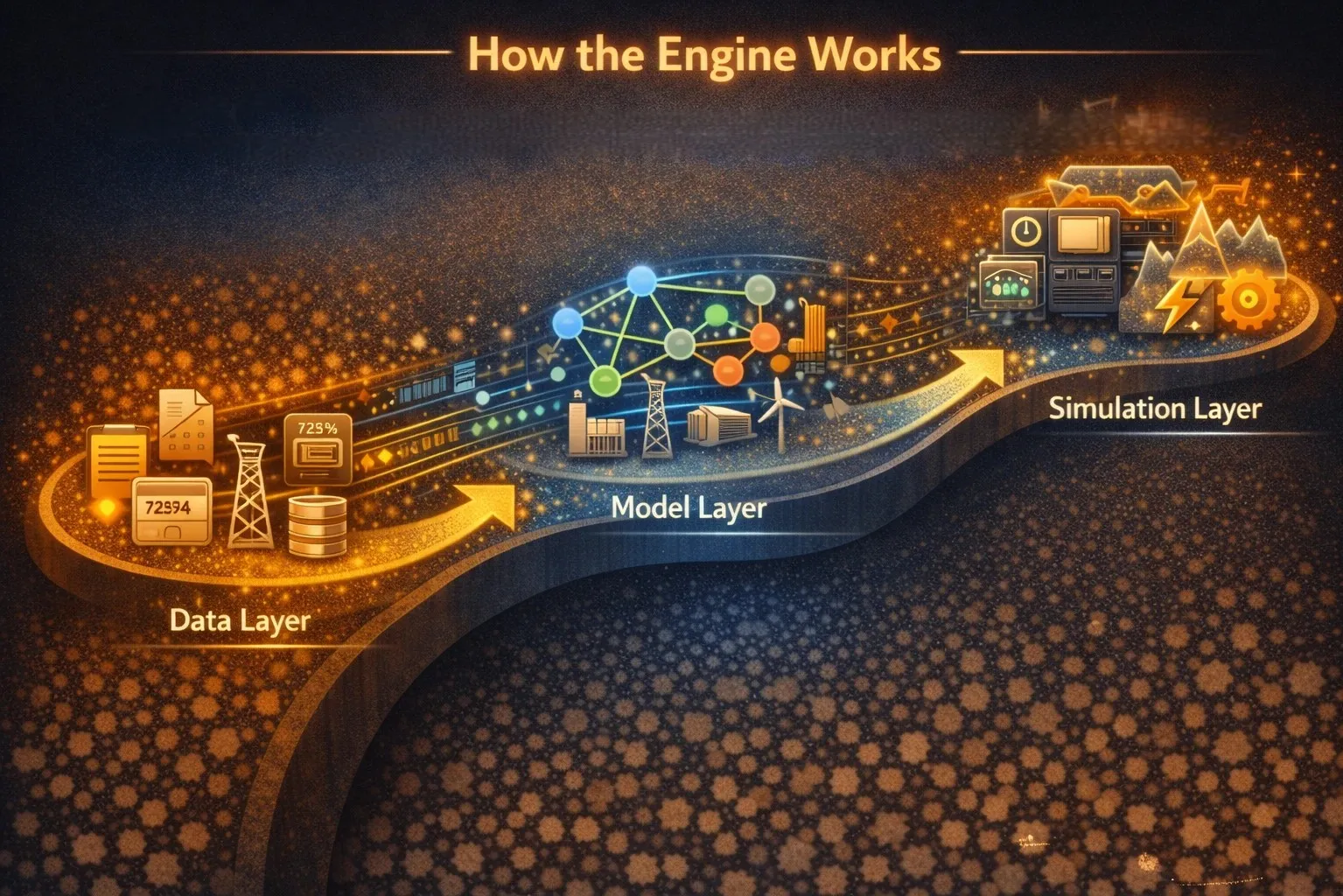
How the Engine Works
A unified, three-layer architecture designed to ingest chaotic real-world data and output clean, actionable grid intelligence.
1. Data Layer
Seamlessly ingests SCADA feeds, AMI integration, IoT telemetry streams, and static asset metadata.
2. Model Layer
Constructs the topology graph, applies continuous state estimation algorithms, and assigns asset behavior models.
3. Simulation Layer
Executes high-speed load flow simulations, operational risk modeling, and scenario forecasting.
Core Capabilities
Topology Modeling
Automatically builds and self-heals grid connectivity models directly from GIS and infrastructure datasets, eliminating manual mapping errors.
State Estimation
Continuously estimates grid state using incoming telemetry, edge sensor streams, and advanced statistical inference to fill blind spots.
Power Flow Modeling
Simulates the exact distribution of power across complex feeders and substations under rapidly changing weather or load conditions.
Real-Time Sync
The twin never sleeps. It continuously updates its baseline reality using sub-second streaming telemetry from grid infrastructure.
Load Forecasting
Predicts acute demand growth spikes and optimizes long-term distribution planning based on localized DER integration.
Operational Outcomes
Proven metrics from active deployments across Tier-1 utility operators.
30%
Reduction in
Outage Risk
25%
Better CapEx
Planning
40%
Faster Operational
Insight
<1s
Simulation
Latency